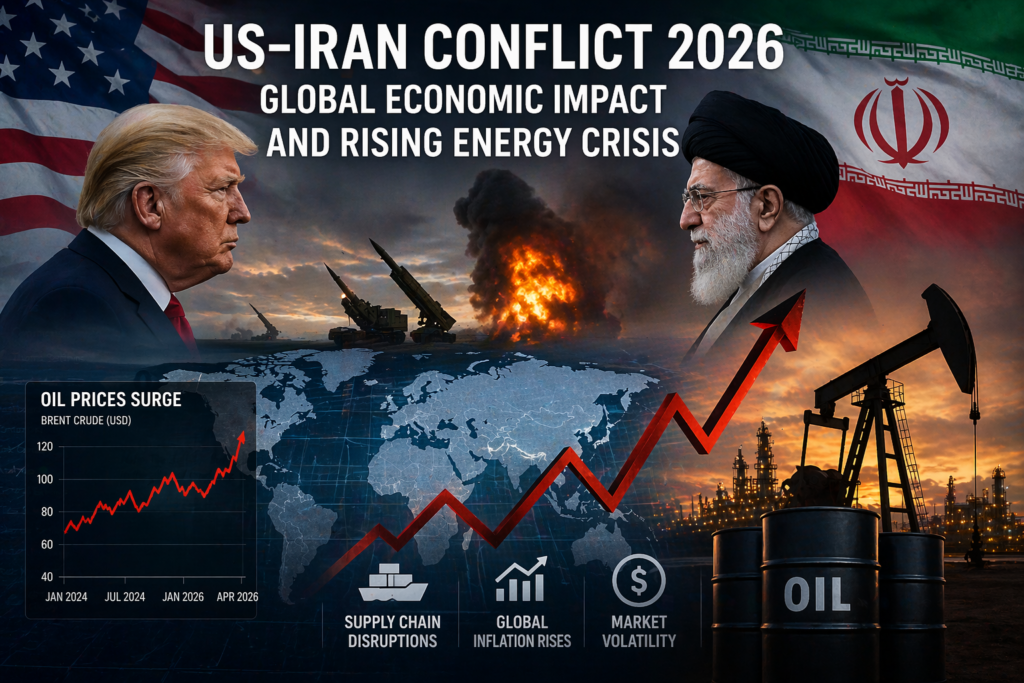
The US Iran conflict 2026 has become one of the most important global developments shaping today’s economy. Although the situation has not escalated into full-scale war, its economic impact is already being felt worldwide.
Global markets, energy prices, and financial systems are reacting quickly. As tensions increase, uncertainty grows, and this directly affects both businesses and consumers.
🌍 Global Oil Market Impact
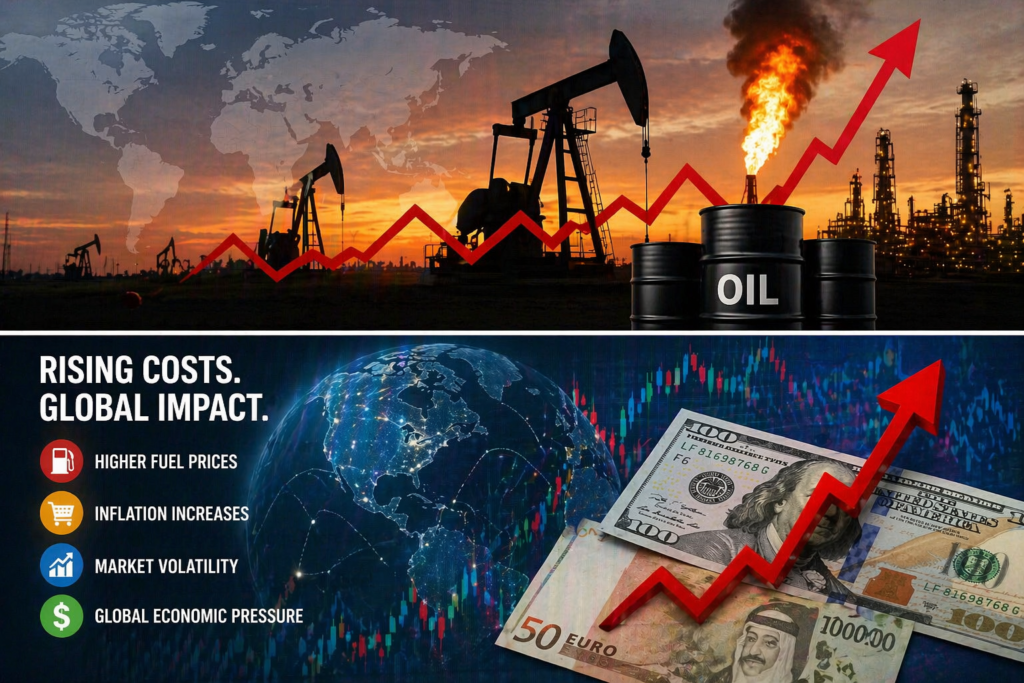
The Strait of Hormuz plays a crucial role in the US Iran conflict 2026. Nearly 20% of the world’s oil supply passes through this narrow route. Because of rising tensions, oil prices have increased significantly in recent weeks.
When oil prices rise, the impact spreads globally. Countries that depend on energy imports are the most affected. Higher energy costs increase the price of transportation, electricity, and industrial production.
This increase in energy costs directly impacts transportation, manufacturing, and global supply chains. As fuel becomes more expensive, businesses face higher operational costs, which are often passed on to consumers. This leads to inflation, reducing purchasing power and slowing economic growth.
👉 Read more:
https://newsai24.com/us-iran-tensions-escalate-after-strait-of-hormuz-incident-global-concerns-rise/
Financial markets have also reacted strongly to the US Iran conflict 2026. Investors tend to move their money toward safer assets such as gold and government bonds during times of uncertainty. This shift creates instability in stock markets and currency exchange rates.
In addition, global trade is being affected. Shipping costs are increasing due to risk factors in key maritime routes, and delays in supply chains are becoming more common. Countries that rely heavily on imported energy are particularly vulnerable, facing rising costs and potential shortages.
👉 International source on the situation::
https://www.bbc.com/news
Another major concern is the long-term impact. Governments may accelerate investments in renewable energy to reduce dependence on unstable regions. However, such transitions require time and resources, meaning the short-term economic pressure will likely continue.
Looking ahead, the situation remains uncertain. A diplomatic solution could stabilize markets, but further escalation may lead to prolonged economic instability or even a global economic slowdown.
In conclusion, the US Iran conflict 2026 is not only a political or military issue—it is a global economic challenge. Its impact on oil prices, inflation, and financial markets makes it one of the most important developments shaping the world economy today.